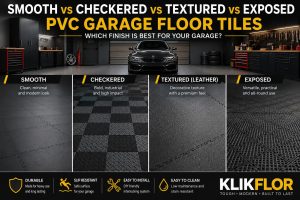

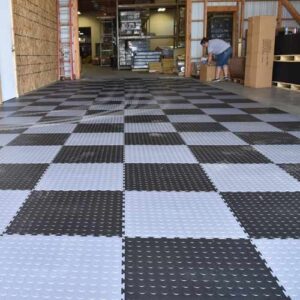

Why Garage Flooring Choices Matter
Your garage flooring does a lot more than cover concrete. It faces oil spills, temperature swings, and the weight of vehicles daily. Choosing between PVC interlocking tiles and plastic interlocking floor tiles often comes down to what you value most — comfort, strength, or cost.
What Are Interlocking PVC Floor Tiles?
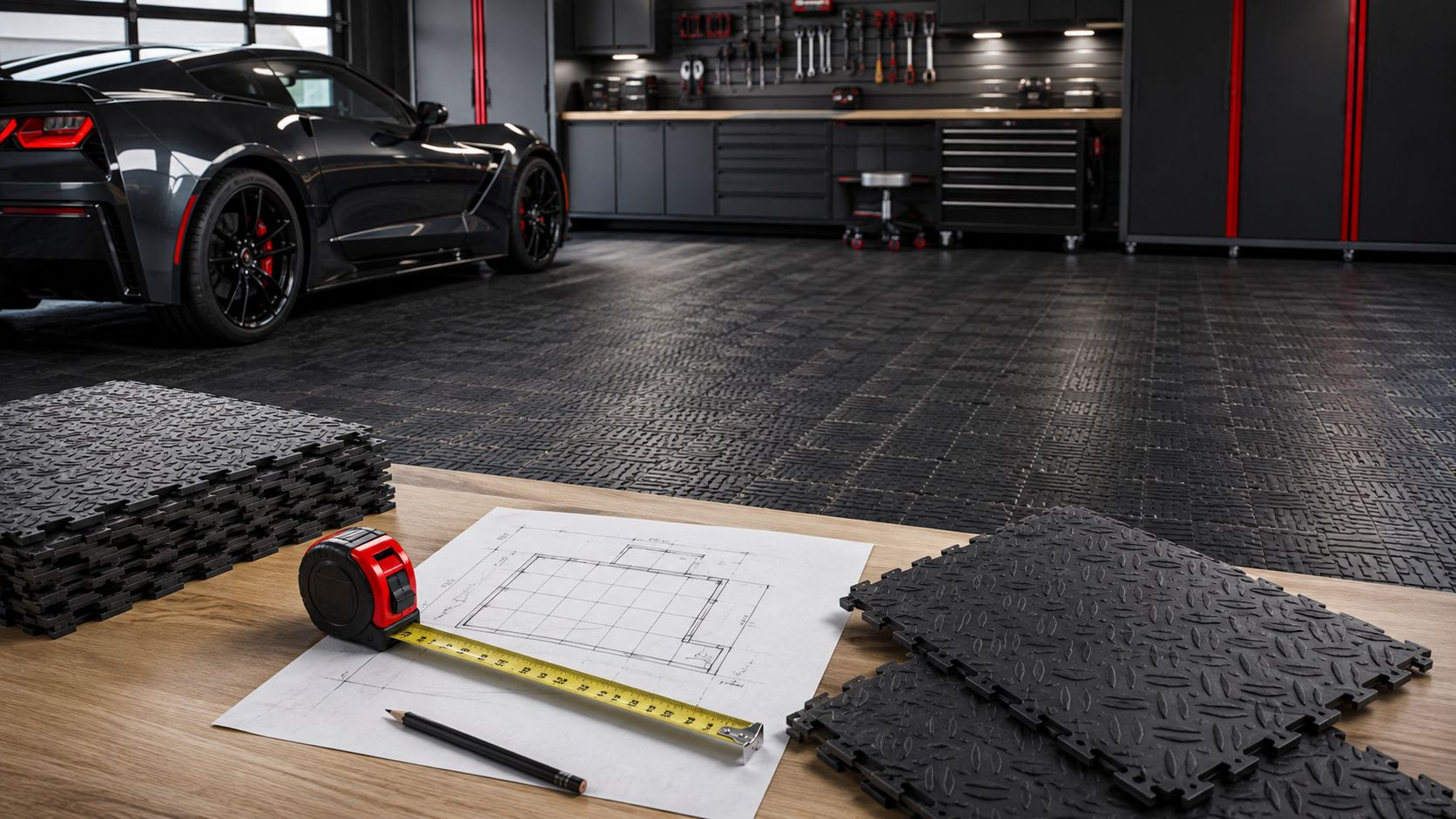
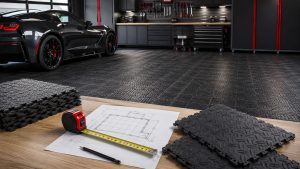
Interlocking PVC floor tiles are crafted from high-quality, flexible polyvinyl chloride. They’re known for their ability to handle heavy loads without cracking, making them perfect for garages, gyms, and industrial spaces. Their flexibility adds a soft underfoot feel and reduces noise.
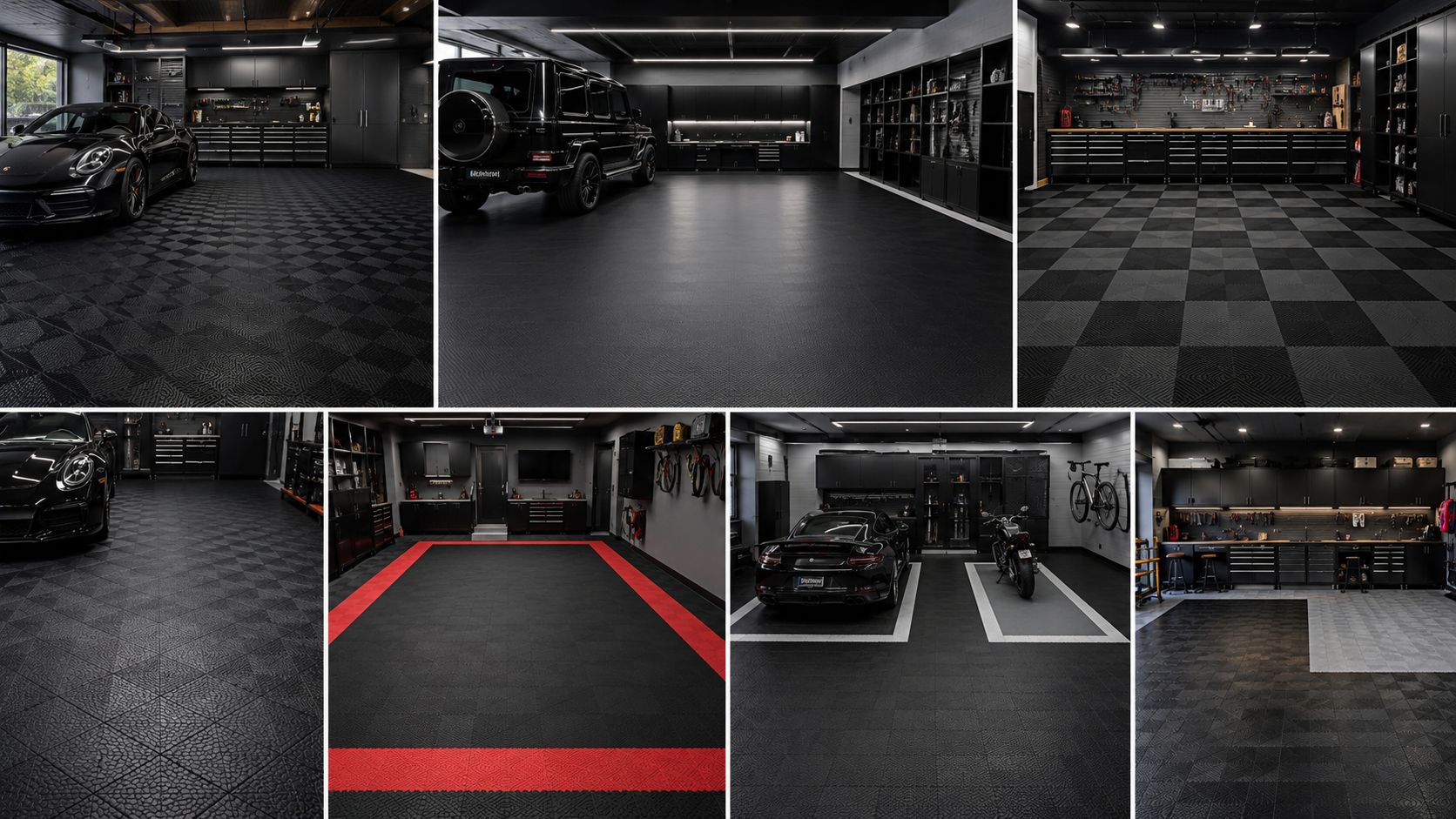
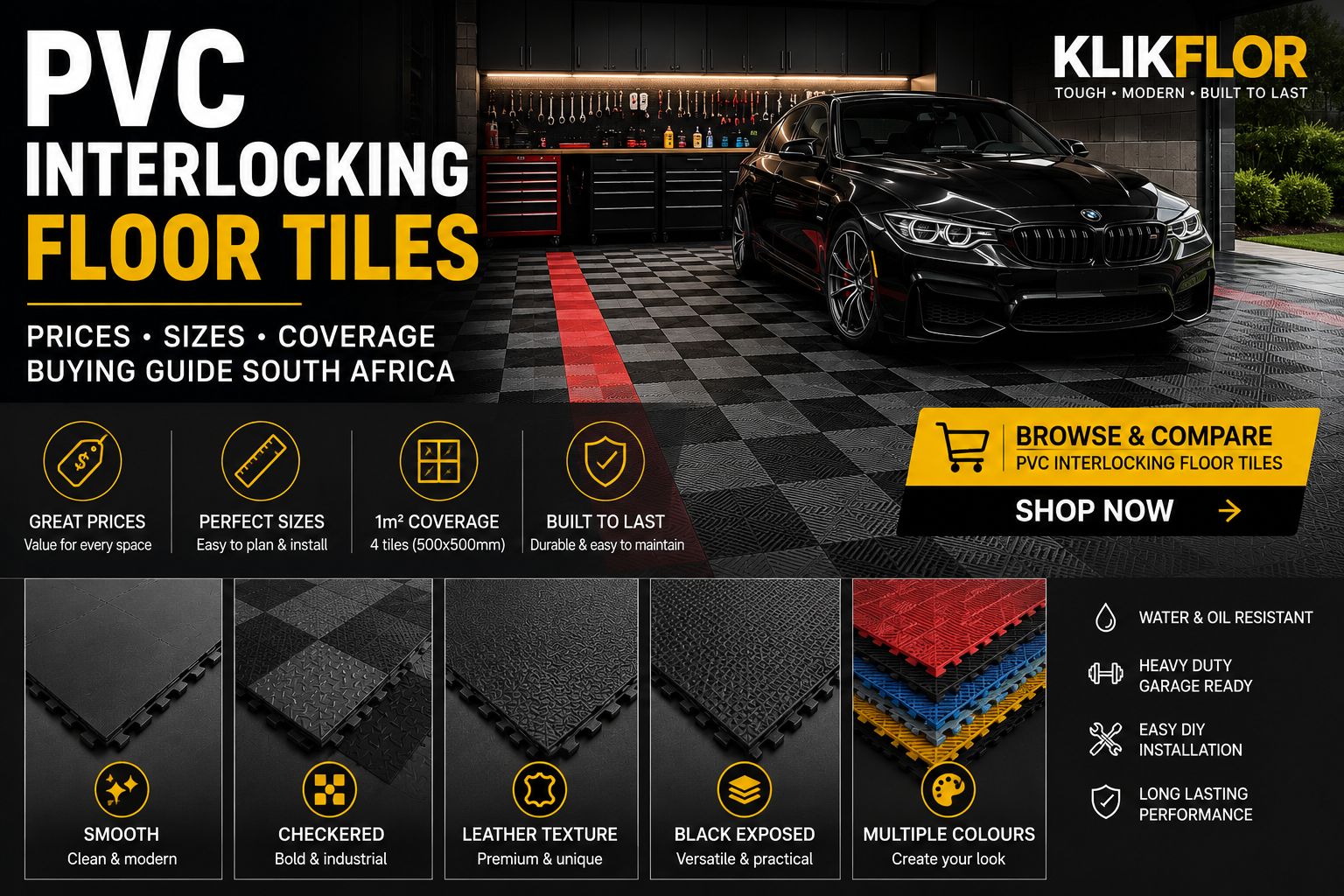
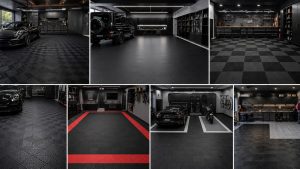
If you’re looking for tough and sleek options, visit Klikflor’ PVC Garage Floor Tiles — designed for maximum durability and aesthetic appeal.
What Are Plastic Interlocking Floor Tiles?
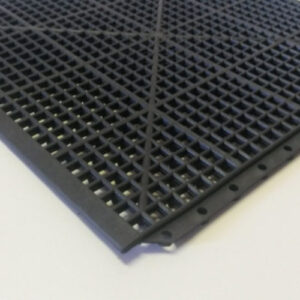
Plastic interlocking floor tiles, typically made of polypropylene, are more rigid and lightweight. They’re excellent for outdoor or temporary use due to their ventilated grid design, which allows airflow and water drainage. However, they’re less resilient under heavy, constant loads, making them less ideal for garages or workshops.
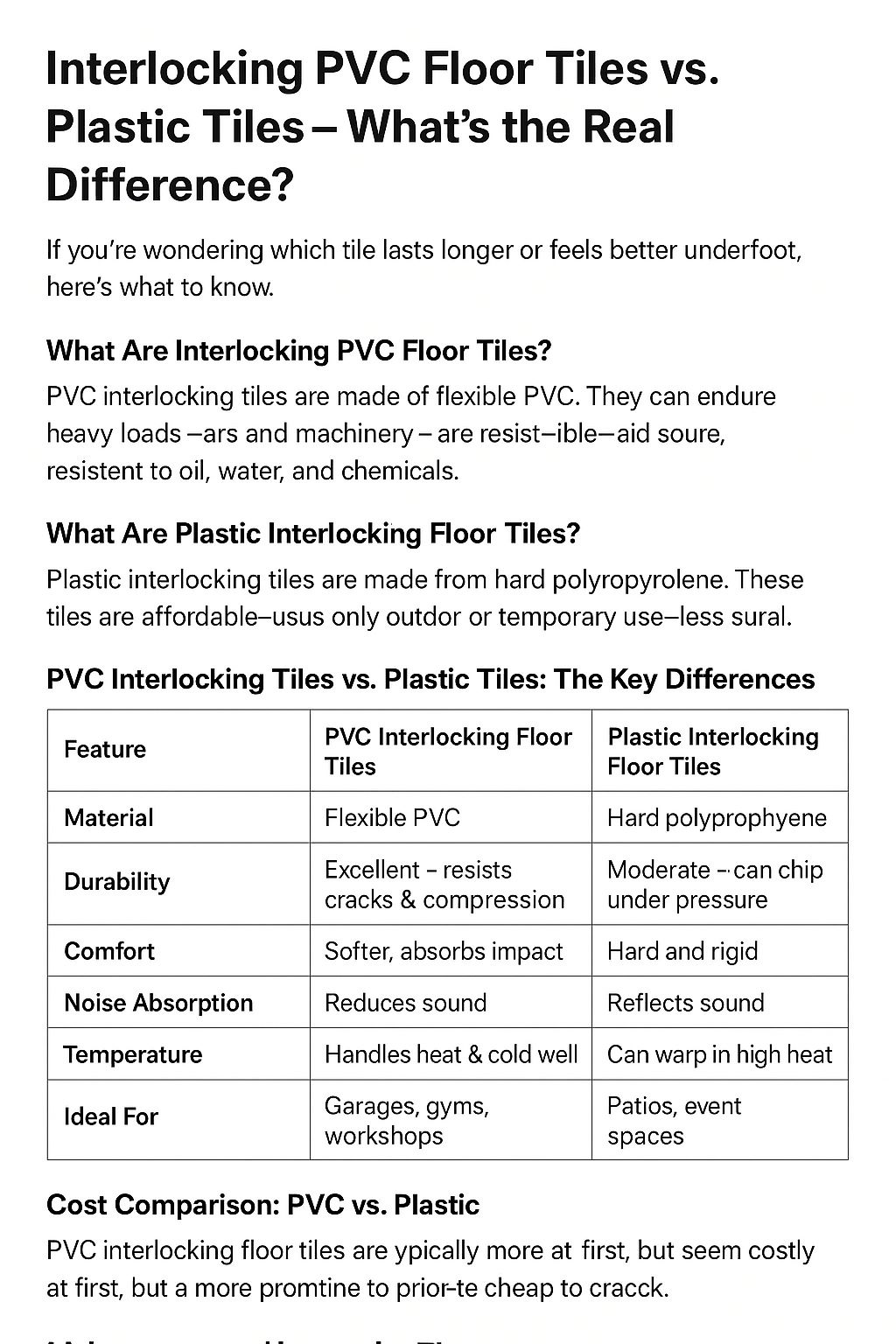
PVC Interlocking Tiles vs. Plastic Tiles: The Key Differences
| Feature | PVC Interlocking Floor Tiles | Plastic Interlocking Floor Tiles |
|---|---|---|
| Material | Flexible PVC | Rigid polypropylene |
| Durability | Resists cracks & compression | Can chip or warp under pressure |
| Comfort | Softer, absorbs impact | Hard and rigid |
| Noise Absorption | Quieter and cushioned | Reflects sound |
| Temperature Resistance | Withstands heat & cold | May distort in extreme heat |
| Ideal For | Garages, gyms, workshops | Patios, events, temporary setups |
PVC tiles win for comfort, longevity, and heavy-duty use, while plastic tiles serve best for temporary or decorative flooring.
Best Applications for PVC Interlocking Floor Tiles
PVC tiles work beautifully in garage flooring, home gyms, or commercial workshops. Their grip and resilience make them safe for both vehicles and people. You can pair them with Interlocking Rubber Tiles for added traction or cushioning.
For those in South Africa, explore the full Garage Flooring Collection at Klikflor.
Best Applications for Plastic Interlocking Floor Tiles
Plastic tiles are ideal for lighter-duty or temporary spaces — patios, exhibition stands, and pop-up venues. Their ventilation design helps avoid moisture buildup outdoors, though they’re not suited for continuous heavy loads.
Cost Comparison: PVC vs. Plastic
PVC interlocking tiles cost more upfront but offer better value long-term due to their durability. Plastic tiles, while cheaper initially, may require replacement more often if used in high-traffic areas. To compare exact pricing, you can request a quick quote from Klikflor.
Maintenance and Longevity Tips
PVC tiles are simple to maintain — regular sweeping and occasional mopping are enough. Plastic tiles, on the other hand, may need more frequent replacement if exposed to outdoor heat and UV rays.
If you want more protection for specific areas, browse Klikflor’s Rubber Mats Collection.
How to Choose Between PVC and Plastic Tiles
Your decision depends on how you use the space:
-
Pick PVC interlocking floor tiles for garages, workshops, or gyms.
-
Choose plastic interlocking floor tiles for temporary, outdoor, or event areas.
PVC tiles simply handle more — load, time, and wear — without giving up comfort or looks.
Where to Buy PVC Garage Floor Tiles in South Africa
For quality, locally available options, Klikflor offers premium PVC tiles built for South African conditions, blending function and durability.
FAQs
1. What’s the main difference between PVC and plastic tiles?
PVC is flexible and durable, while plastic is rigid and more suited to temporary setups.
2. Are PVC interlocking floor tiles waterproof?
Yes, PVC tiles are highly water-resistant and ideal for garages or wet areas.
3. Which lasts longer for garage use?
PVC interlocking floor tiles outlast plastic tiles under heavy loads and frequent use.
4. Can I mix PVC and plastic tiles together?
It’s not recommended; their material properties and interlock designs differ.
5. Do these tiles need adhesive?
No. Both types feature interlocking edges that fit securely without glue.
6. How do I get a quote for PVC interlocking tiles in South Africa?
You can easily request a quote here.
Conclusion: Making the Right Choice for Your Space
Both tile types have their uses, but if you want something that can handle real-life garage wear — from hot tires to dropped tools — PVC interlocking floor tiles are the better long-term investment.